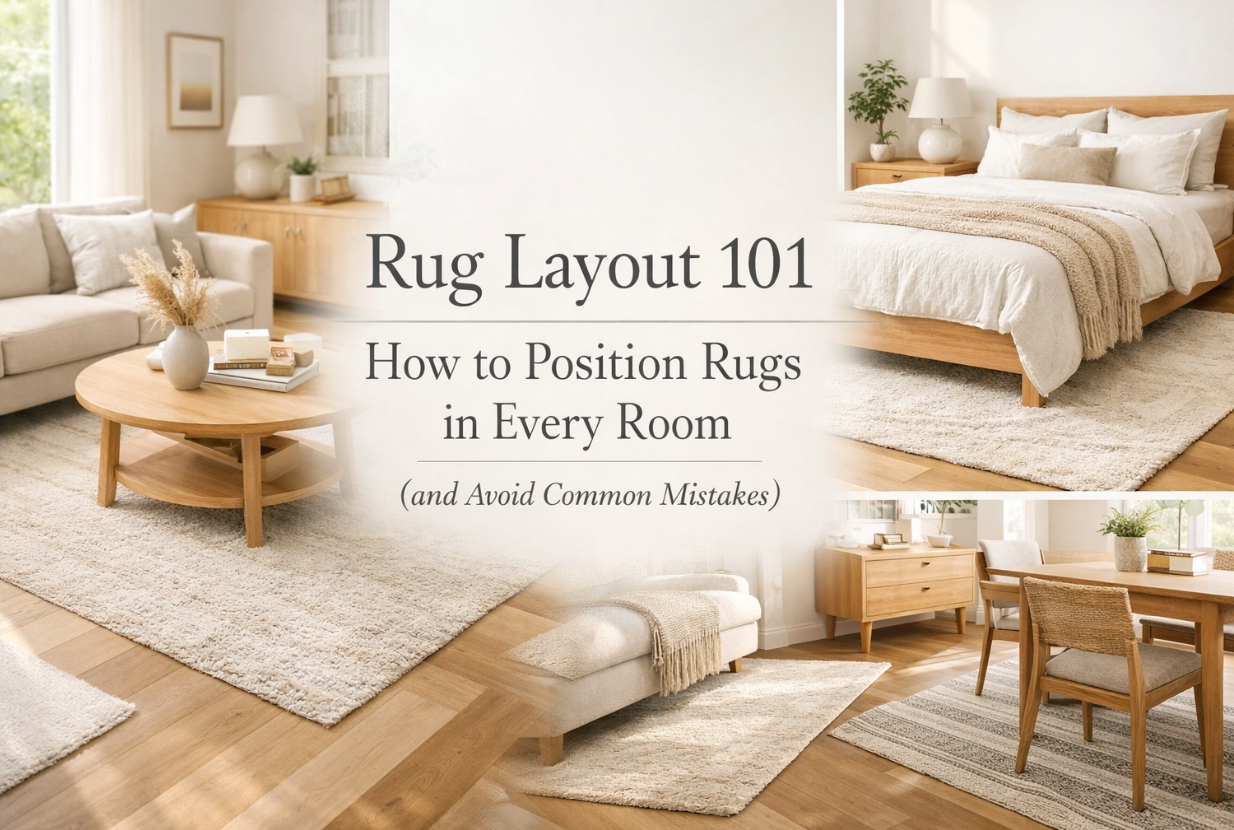
A rug is so much more than just a piece of fabric on the floor: it is the heartbeat of your home’s design! 🏡✨ It’s the secret sauce that makes a space feel instantly pulled-together, cozy, and intentional. But here’s the truth: even the most gorgeous, high-end rug can look "off" if it’s the wrong size or placed incorrectly. 😅📏 Let’s dive into exactly how to position your rugs in every main living zone so you can create a home that feels designer-level today! 🛋️✨
1) The Living Room Anchor: Create Your Sanctuary 🛋️☁️
Your living room is where life happens: movie nights, morning coffee, and cozy chats! ☕🎬 To make this space feel like a true sanctuary, your rug has to work with your furniture layout, not against it.
The Front Leg Rule: Aim for at least the front 6-8 inches of your sofa and armchairs to rest on the rug. 📏🐕 This simple trick locks everything in place! If your rug is too small to reach the sofa, try layering it over a larger, inexpensive jute or sisal rug to get that extra "visual real estate" without breaking the bank. 🧺🙌
Center on the Focal Point: Usually, this means centering your rug on the fireplace or the TV console. 📺🔥 However, if your furniture is shifted to one side of the room, center the rug on the furniture grouping itself! 🧠🛋️ Symmetry is great, but functional balance is even better for a room that actually works for your lifestyle.
2) Dining Room Rugs: The Chair Test 🍷🪑
Dining room rugs are all about function and flow! 🥘🥂 There is nothing more frustrating than a dining chair leg getting caught on the edge of a rug every time you try to sit down. 😅🛑 This is why the "Chair Test" is your non-negotiable rule for this room!
The Golden Rule: Your rug must extend 24 to 30 inches beyond the edge of the table on all sides. 📏🍽️ This ensures that when you pull your chair out to sit down, the back legs stay firmly on the rug. It feels stable, looks professional, and prevents those annoying "rug trips!" 🪜🚫
Pile Height Matters: For the dining room, we always recommend a low-pile or flatweave rug. 🧺🍷 It’s much easier to slide chairs across a flat surface, and it’s a total lifesaver when it comes to cleaning up those inevitable crumbs or spills!
3) Bedroom Layouts: Soft Landings Every Morning 🛏️☁️
Your bedroom should be the ultimate soft landing! 😴✨ When you step out of bed in the morning, you don't want your feet hitting a cold floor: you want a cozy, textured rug to greet you! 👣🧺
The Two-Thirds Rule: For a Queen or King bed, place a large rug (8x10 or 9x12) under the bottom two-thirds of the bed. 🛏️📏 This allows the rug to extend about 18-24 inches on either side and at the foot, creating a balanced and plush look. It leaves the area under your nightstands clear, which makes the room feel airy and organized! 🙌
4) Defining Zones in Open Concept Layouts 🏡🧭
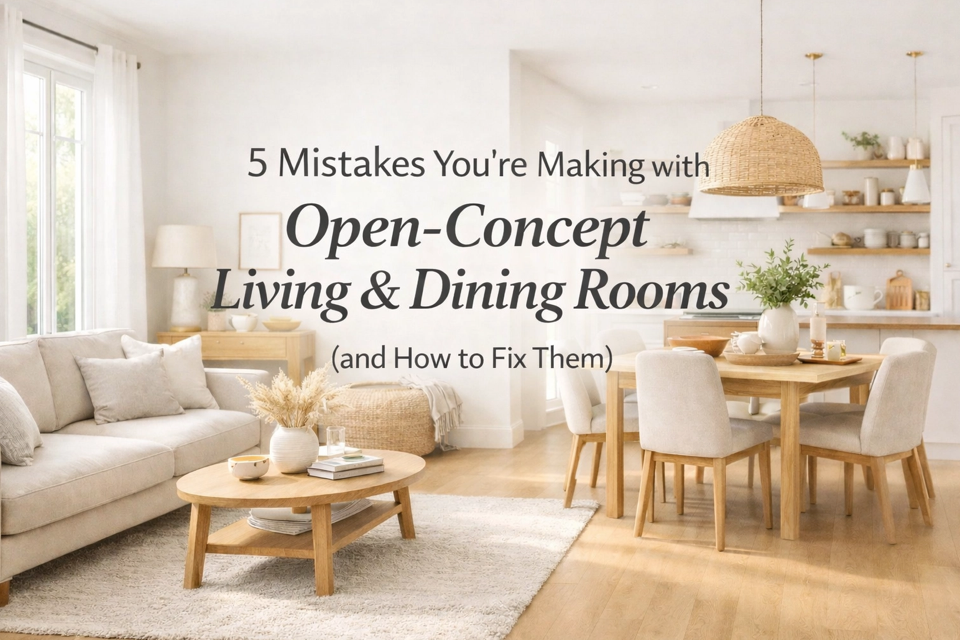
Open-concept living is amazing for entertaining, but it can feel a bit chaotic if you don't define your spaces. 😅🌪️ This is where rugs become your best friend: they act as "walls" without actually blocking any views! 🧱❌
Create Visual Boundaries: Use one rug to define the "Living Zone" and another to define the "Dining Zone." 🛋️🍽️ This creates a clear path of travel and tells the eye exactly where one room ends and the next begins.
5) Entryways and Hallways: The First Impression 🚪👋
Your entryway is the first thing guests see when they walk through the door: make it count! ✨👠 An entryway rug or runner should feel welcoming and substantial, not like a skinny strip of fabric.
Go Wide: Make sure your runner is wide enough that people can actually walk on it comfortably! 🏃♂️💨 You should ideally leave about 4 to 6 inches of floor showing on either side of the rug. This creates a framed, intentional look that guides people into your home with style! 🖼️🏡